
Careers in Biotechnology and Genetics
Where biology meets technology in medicine, agriculture and research, and the careers it offers.
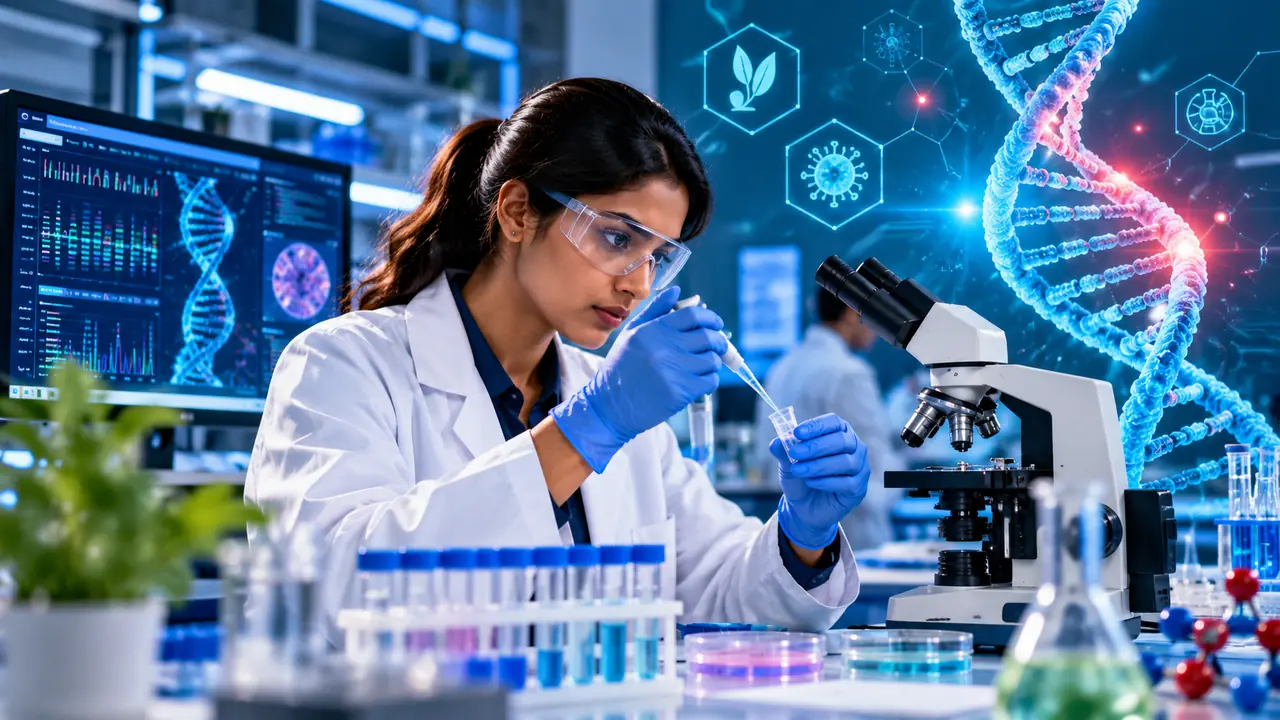
Vaccines developed at record speed, crops that resist drought, genetic tests that detect disease early, medicines designed for a person's genes: these are all achievements of biotechnology and genetics. It's the field where biology meets technology to solve some of humanity's biggest problems.
For students who love Biology but aren't sure medicine is for them, biotechnology offers a wide range of scientific careers. This guide explains the career paths, skills and education routes, along with an honest look at what the field requires.
What is biotechnology?
Biotechnology uses living cells, organisms and biological processes to create products and solutions. Genetics, the study of genes and heredity, is closely linked and underpins many modern biotech advances. Major areas include:
| Area | Examples |
|---|---|
| Medical and pharmaceutical biotech | Vaccines, new medicines, diagnostics and gene therapies |
| Agricultural biotech | Improved crops, pest resistance and better food production |
| Industrial biotech | Biofuels, enzymes and eco-friendly manufacturing |
| Environmental biotech | Cleaning pollution and treating waste using biology |
| Genomics and bioinformatics | Reading and analysing genetic data using computers |
What are the main career paths?
| Role | What they do |
|---|---|
| Research scientist | Designs and runs experiments to discover new knowledge and products |
| Genetic scientist | Studies genes, inherited conditions and genetic variation |
| Bioinformatics specialist | Uses computing and data science to analyse biological and genetic data |
| Clinical research professional | Manages trials that test the safety and effectiveness of new treatments |
| Quality control and regulatory specialist | Ensures biotech and pharma products are safe and meet regulations |
| Genetic counsellor | Helps individuals and families understand genetic test results |
| Agricultural biotechnologist | Develops better crops and farming solutions |
| Biomanufacturing and production specialist | Manages the large-scale production of vaccines, medicines and enzymes |
What skills do you need?
- Strong Biology and Chemistry foundations
- Laboratory skills, precision and careful record-keeping
- Data and computing skills, increasingly important as genetic data grows
- Research thinking: forming questions, testing ideas and analysing results
- Patience and persistence, because experiments often fail before they succeed
- Ethics, since genetics and biotech raise important ethical questions
Biotechnology suits students with strong interest in Biology, careful attention to detail and analytical aptitude.
What is the education pathway?
In school (Classes 9 to 12)
- Choose PCB (Physics, Chemistry, Biology), or PCMB to keep engineering-based biotech routes open
- Take part in science olympiads, biology projects and science fairs
- Consider learning basic programming, since bioinformatics is a fast-growing area
After Class 12
- B.Sc. in Biotechnology, Genetics, Microbiology, Biochemistry or Life Sciences
- B.Tech in Biotechnology or Bioengineering, which often requires PCM or PCMB
- B.Pharm for students interested in pharmaceuticals
After graduation
Here's an honest point: many biotech careers, especially research, require a master's degree, and often a PhD. Students should plan for several years of higher study. Strong master's and PhD programmes exist in India and abroad, and research roles abroad often come with funding.
Is biotechnology a good career for the future?
Healthcare, food security and sustainable manufacturing are long-term global priorities, and biotechnology plays a role in all of them. Advances in genetics and data are opening new areas like personalised medicine and bioinformatics. Growth is strongest for people with specialised skills and higher qualifications.
Is biotechnology right for you?
It may suit you if you love Biology, enjoy lab work and experiments, are patient and curious, and are willing to pursue higher studies. If you love Biology but prefer working directly with patients, medicine, nursing or allied health may suit you better. A psychometric career assessment can help you compare these paths. See also our guide on Science vs Commerce vs Humanities.
Summary
Biotechnology and genetics use biology and technology to improve health, agriculture, industry and the environment. Careers include research, genetics, bioinformatics, clinical research, quality and regulatory work, and genetic counselling. The usual path is PCB or PCMB, followed by a biotech or life sciences degree and, for many roles, a master's or PhD. It's a rewarding field for curious, patient students who love science.
Career Captain’s assessments and counselling help you compare biotechnology, medicine and allied health careers and choose the path that fits you best.
Book a counselling sessionFrequently asked questions
Which stream is needed for biotechnology?
PCB is the most common route. PCMB keeps both B.Sc. and B.Tech biotechnology options open, since some B.Tech programmes require Maths.
Is biotechnology a good option for students who don't want to be doctors?
Yes. Biotechnology offers many science careers for students who love Biology but prefer research, laboratory or data-focused work over clinical practice.
Do I need a PhD for a career in biotechnology?
Many research roles require a master's and often a PhD. Some industry roles in quality, production and clinical research are open to graduates or master's holders.
What is bioinformatics?
Bioinformatics combines biology, computing and data science to analyse biological data, especially genetic data. It's a fast-growing area that benefits from programming skills.
What does a genetic counsellor do?
A genetic counsellor helps individuals and families understand genetic test results and inherited conditions, and supports them in making informed decisions.