
Study Abroad Documents: What to Prepare
A practical checklist to help you organise every document for an international application, stage by stage.
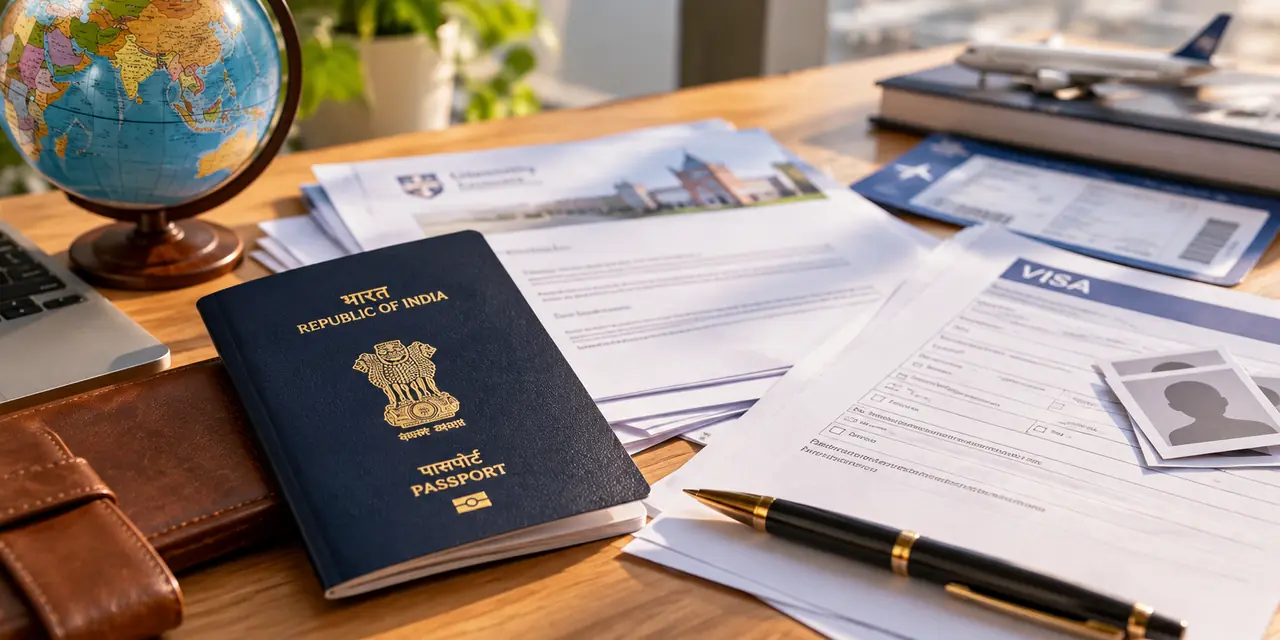
A strong study abroad application can be delayed, or even refused, because of one missing document. A bank statement that's a few days short, a name spelt differently on two certificates, or a transcript without the right attestation can cost weeks of time.
The good news is that most documents are predictable. This checklist helps you organise everything in advance, stage by stage, whichever country you're applying to.
Start with the basics: identity documents
- Passport valid for your full course, ideally with at least six months extra beyond your planned stay
- Passport-size photographs in the specifications required by each country
- Birth certificate, sometimes needed to prove relationships with sponsors
- Aadhaar or PAN card for Indian bank and loan processes
Academic documents
- Class 10 and Class 12 marksheets and passing certificates
- Bachelor's degree marksheets for every semester, provisional certificate and degree certificate (for master's applicants)
- Official transcripts, often sealed and issued by your university
- Backlog or grading scale certificates, if your university uses a special grading system
- Medium of instruction letter, if requested, confirming that you studied in English
Test scores
- English tests: IELTS, TOEFL, PTE or other accepted tests
- Aptitude tests if required: SAT or ACT for some undergraduate programmes, GRE or GMAT for some postgraduate programmes
- Subject or admissions tests, such as UCAT for UK medicine
- Language tests for non-English programmes, such as German or French certificates
Application documents
- Statement of purpose (SOP) or personal statement, tailored to each university
- Letters of recommendation (LORs) from teachers, professors or employers
- CV or resume highlighting education, projects, internships and activities
- Portfolio for design, architecture, art and media courses
- Certificates for achievements, competitions, internships and extracurricular activities
- Work experience letters, if applicable
Financial documents
Financial evidence is where many visa applications go wrong. Common documents include:
- Bank statements showing the required funds held for the required period
- Education loan sanction letter from your bank or lender
- Sponsor's income proof, such as income tax returns, salary slips or business documents
- Sponsorship letter or affidavit from parents or sponsors
- Scholarship award letters, if any
- Country-specific proof of funds, such as a German blocked account confirmation
- Tuition fee payment receipts or deposit confirmation
Every country sets its own rules on amounts, how long funds must be held and which accounts are acceptable. For example, the UK usually requires funds to be held for 28 consecutive days. Check the exact rules before moving money. For budgeting, read the real cost of studying abroad in 2026.
Country-specific documents
| Country | Documents to know about |
|---|---|
| Germany | APS certificate (plus dMAT for some master's applicants from the summer 2027 intake), blocked account confirmation, health insurance |
| United Kingdom | CAS number from your university, TB test certificate for Indian applicants, financial evidence meeting the 28-day rule |
| France | Campus France application and interview, proof of funds and accommodation |
| Ireland | Letter of acceptance, proof of fees paid, proof of funds and private medical insurance |
Requirements differ by country and change over time, so always use the official checklist from the embassy or visa service you're applying to. For country guides, see studying in Germany and planning your UK university journey.
Visa and travel documents
- Completed visa application form and fee payment receipt
- Offer or admission letter
- Health insurance or health surcharge payment
- Medical tests where required
- Accommodation proof, if requested
- Flight booking, usually after your visa is approved
How to keep your documents organised
- Create one master folder, both physical and digital, with sub-folders for each category above.
- Scan everything in clear colour PDFs and name files consistently, such as “Class12_Marksheet.pdf”.
- Get attestations and translations early. Some documents need university attestation, notarisation or an apostille, which takes time.
- Order extra copies of official transcripts, since several universities may need sealed originals.
- Track expiry dates for your passport, test scores (many are valid for two years) and bank statements.
- Keep originals safe and carry important ones in your hand luggage when you travel.
Common document mistakes to avoid
Summary
A study abroad application needs identity, academic, test, application, financial, country-specific and visa documents. Start early, keep names consistent, scan and organise everything, allow time for attestations and country-specific processes, and always follow the official checklist for your destination. Good organisation can save weeks and prevent costly refusals.
Career Captain’s study abroad counsellors review your documents, SOP and financial evidence so your application is complete and on time.
Book a study abroad consultationFrequently asked questions
Which documents are needed to study abroad?
Most applications need a passport, academic marksheets and transcripts, English test scores, a statement of purpose, letters of recommendation, a CV and financial documents, plus country-specific documents such as the APS certificate for Germany or a CAS for the UK.
How early should I start preparing documents?
Ideally 12 to 18 months before your course starts. Attestations, transcripts, tests and country-specific processes like APS or Campus France can take several weeks each.
What financial documents do I need for a student visa?
Usually bank statements, an education loan sanction letter, sponsor income proof and a sponsorship letter. Some countries have special requirements, such as Germany's blocked account or the UK's 28-day rule.
How long are IELTS and TOEFL scores valid?
Scores are generally valid for two years. Make sure they are still valid when you apply and, in some cases, when you apply for your visa.
What is the most common document mistake?
Name mismatches across documents and financial evidence that doesn't meet the required amount or holding period are among the most common causes of delays and refusals.