
Careers in Automotive Design
Where design, engineering and technology meet: what automotive designers do and how to become one.
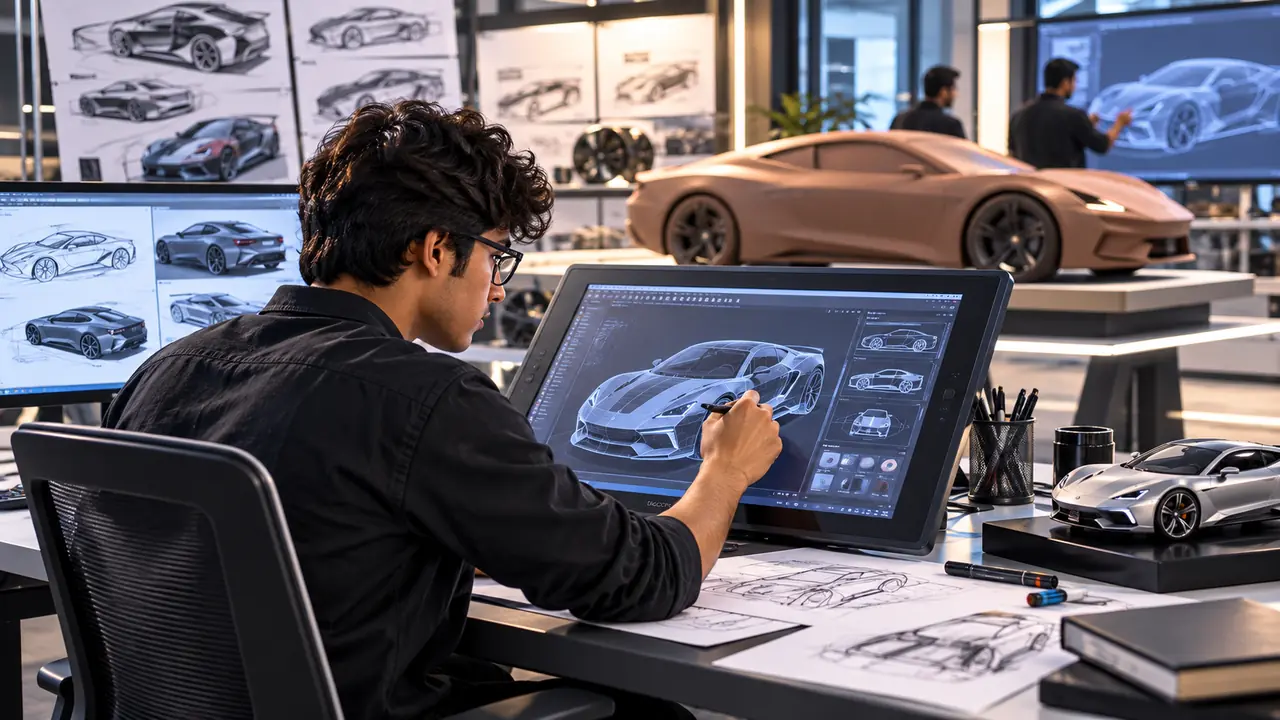
Every car you see on the road began as a sketch. Before engineers perfect the engine and manufacturers build the body, a designer imagined how the car would look, feel and move. Automotive design is where art meets engineering, and it's one of the most exciting creative careers for students who love both vehicles and design.
With the shift to electric vehicles, connected cars and new forms of mobility, the field is changing fast. This guide explains what automotive designers do, the skills they need and the education routes into the industry.
What is automotive design?
Automotive design (often part of transportation design) focuses on the appearance, comfort and user experience of vehicles, including cars, motorcycles, trucks, buses and electric scooters. Designers work closely with engineers to create vehicles that are beautiful, functional, safe and possible to manufacture.
What are the main career paths?
| Role | What they do |
|---|---|
| Exterior designer | Shapes the outside of the vehicle: its form, proportions, lights and overall look |
| Interior designer | Designs the cabin, including seats, dashboard, controls and comfort |
| Colour, materials and finish (CMF) designer | Chooses colours, fabrics, textures and finishes |
| UX and HMI designer | Designs digital screens, controls and how drivers interact with the vehicle |
| Digital modeller | Creates precise 3D models of designs using specialised software |
| Clay modeller | Sculpts full-size or scale physical models to test designs in real life |
| Design engineer | Bridges design and engineering to make concepts manufacturable |
How is the industry changing?
- Electric vehicles have new proportions and layouts without traditional engines, giving designers more freedom
- Connected and smart cars make digital interfaces and user experience central to design
- Sustainability is driving new materials and eco-friendly finishes
- New mobility, including electric two-wheelers, shared vehicles and autonomous concepts, is creating new design challenges
India's large and growing automotive and electric two-wheeler industry means opportunities are expanding at home as well as abroad.
What skills do automotive designers need?
- Sketching and visualisation, since quick, expressive drawing is fundamental
- Strong spatial ability to imagine 3D forms from every angle
- 3D modelling software, such as industry-standard surfacing and modelling tools
- An eye for form, proportion and detail
- Understanding of engineering, ergonomics and manufacturing
- Communication and presentation to explain and defend design ideas
- A strong portfolio showing sketches, models and design thinking
Automotive design suits students with strong spatial and creative aptitude and a genuine passion for vehicles.
What is the education pathway?
In school (Classes 9 to 12)
- Sketch regularly, drawing cars, products and everyday objects from different angles
- Learn basic 3D modelling using free software
- Build a portfolio of your best work
- Any stream can work for design, though Physics and Maths help with engineering-related roles
After Class 12
- Bachelor of Design (B.Des) in industrial, product or transportation design, through design entrance exams such as UCEED, NID DAT and other institute-level tests
- B.Tech in Mechanical or Automobile Engineering for students more interested in the engineering side, sometimes followed by a design master's
After graduation
A master's in transportation or automobile design is common for specialist roles. India's National Institute of Design (NID) offers a master's programme in transportation and automobile design, and several design schools abroad, particularly in Europe, are well known for transportation design. See why students are looking at Europe.
Why does the portfolio matter so much?
In design, your portfolio often matters more than your marks. Admissions panels and employers want to see how you think, sketch and solve design problems. Start building one early, include your process (not just final images) and keep improving it.
Is automotive design right for you?
It may suit you if you love vehicles, enjoy sketching and imagining new forms, have strong spatial skills and are willing to practise constantly. It's also a competitive field, so persistence and a strong portfolio are essential. If you're passionate about cars but prefer technical work, automotive engineering may suit you better. Our guide on choosing a career based on your passion can help you decide, and a psychometric career assessment can show how your aptitude fits design careers.
Summary
Automotive design combines creativity and engineering to shape how vehicles look, feel and work. Career paths include exterior, interior, CMF and UX design, digital and clay modelling. The usual route is a design degree through exams like UCEED or NID DAT, often followed by a specialised master's. With electric vehicles and new mobility transforming the industry, it's an exciting time to start. Begin sketching and building your portfolio early.
Career Captain’s assessments and counselling help you check your creative and spatial aptitude and plan your design education and portfolio.
Book a counselling sessionFrequently asked questions
Which stream is needed for automotive design?
Design degrees generally accept students from any stream, but Physics and Maths are helpful, especially for engineering-related design roles. Check each institute's eligibility rules.
Which entrance exams are there for automotive design in India?
Common routes include design entrance exams such as UCEED and NID DAT, along with other institute-level design tests. Students taking the engineering route usually go through JEE or state exams.
Is drawing necessary for automotive design?
Yes. Sketching is a fundamental skill for automotive designers. It can be learned and improved with regular practice.
What software do automotive designers use?
Designers use 2D sketching tools and 3D modelling and surfacing software. Learning basic 3D modelling early gives students an advantage.
Is automotive design a good career?
It's a competitive but exciting field, especially with the shift to electric vehicles and new mobility. Success depends heavily on skill, persistence and a strong portfolio.