
Careers in Healthcare Technology
Medical devices, digital health and technology that improves care: the careers and how to prepare for them.
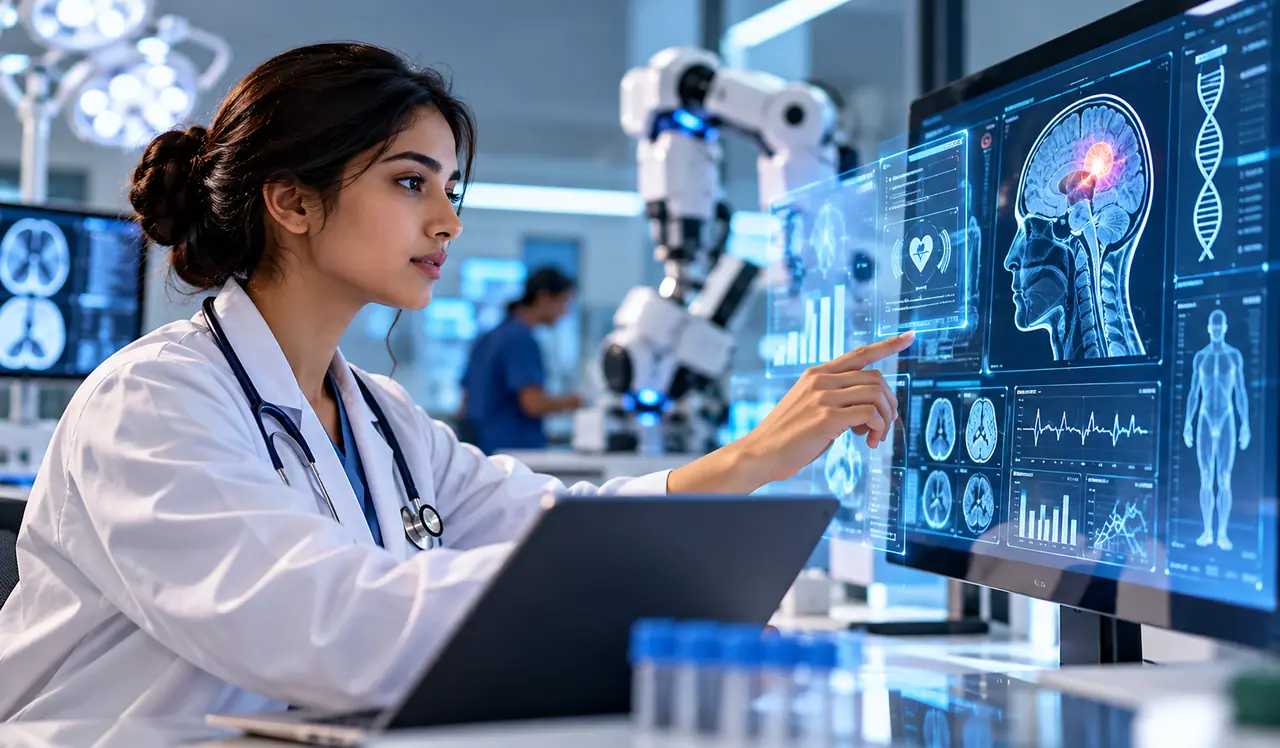
A wearable that warns of an irregular heartbeat. A video consultation with a doctor from a village hundreds of kilometres away. An AI tool that helps radiologists spot problems in scans faster. A robotic arm that assists in surgery. These are all examples of healthcare technology, one of the fastest-changing and most meaningful fields students can explore.
Healthcare technology sits where medicine meets engineering, computing and data. It's a great option for students who want to improve people's health but aren't sure they want to become doctors. This guide explains the career paths, skills and education routes.
What does healthcare technology include?
| Area | Examples |
|---|---|
| Medical devices | Imaging machines, pacemakers, surgical tools, prosthetics and wearables |
| Digital health | Telemedicine, health apps, electronic health records and remote monitoring |
| Health data and AI | Analysing medical data, AI-assisted diagnosis and predicting disease risk |
| Diagnostics | Lab equipment, rapid tests and imaging technology |
| Hospital technology and operations | Systems that run hospitals efficiently and safely |
What are the main career paths?
| Role | What they do |
|---|---|
| Biomedical engineer | Designs and develops medical devices and equipment |
| Clinical engineer | Manages, maintains and ensures the safety of medical equipment in hospitals |
| Health informatics specialist | Manages health data and digital health record systems |
| Health data scientist | Analyses medical data to improve diagnosis, treatment and public health |
| Digital health product manager | Guides the development of health apps and platforms |
| Medical imaging technologist | Operates imaging equipment such as X-ray, CT and MRI machines |
| Regulatory affairs specialist | Ensures medical devices and software meet safety regulations |
| Healthcare administrator | Manages hospital operations, systems and technology adoption |
The field needs people from different backgrounds: engineers, data specialists, allied health professionals and managers.
What skills do you need?
- Science foundations, especially Biology, Physics and Chemistry
- Engineering or computing skills, depending on the role
- Data skills, increasingly important across healthcare
- Attention to detail and responsibility, since patient safety is at stake
- Communication to work with doctors, nurses and patients
- Empathy and a genuine interest in improving people's health
What is the education pathway?
In school (Classes 9 to 12)
- PCM or PCMB for biomedical engineering and health technology engineering
- PCB for allied health technology roles, such as medical imaging and lab technology
- Commerce for healthcare administration and management
- Explore coding, science projects or health-related competitions
After Class 12
- B.Tech or B.E. in Biomedical Engineering, or Electronics, Computer Science or Instrumentation with a health focus
- B.Sc. in allied health sciences, such as medical imaging technology or medical lab technology
- B.Sc. or B.Tech in data science or computer science for health informatics and health data roles
- BBA or management degrees, followed by healthcare or hospital management
After graduation
Master's degrees in biomedical engineering, health informatics, public health or hospital administration open advanced roles. Healthcare technology is also a strong field for study abroad. See our guide to AI-proof careers abroad.
Is healthcare technology a good career for the future?
Growing populations, rising health needs and rapid advances in digital health and AI mean healthcare technology is likely to keep expanding. It also combines technical work with a human purpose, making it both resilient and rewarding. Related fields worth exploring include biotechnology and data science.
Is healthcare technology right for you?
It may suit you if you care about health and wellbeing, enjoy science and technology, and prefer building tools, systems or analysing data over direct patient care. If you strongly prefer working directly with patients, medicine, nursing or allied health may suit you better. A psychometric career assessment can help you compare these paths.
Summary
Healthcare technology includes medical devices, digital health, health data and AI, diagnostics and hospital technology. Careers range from biomedical engineering and health informatics to medical imaging, regulatory affairs and healthcare administration. Routes exist through PCM, PCMB, PCB and Commerce, making it accessible to many students who want to improve healthcare with technology.
Career Captain’s assessments and counselling help you compare healthcare technology, medicine and allied health careers and choose the right path.
Book a counselling sessionFrequently asked questions
What is healthcare technology?
Healthcare technology uses engineering, computing and data to improve healthcare, through medical devices, digital health apps, telemedicine, health data and AI-assisted diagnosis.
Which stream is needed for biomedical engineering?
Biomedical engineering usually requires PCM, and some programmes accept or prefer PCMB. Check each institute's eligibility.
Can PCB students work in healthcare technology?
Yes. PCB students can pursue allied health technology roles such as medical imaging and lab technology, and can move into health informatics with added data skills.
Is healthcare technology a good alternative to medicine?
For students who want to improve health but prefer technology, engineering or data over direct patient care, it can be an excellent alternative.
What is health informatics?
Health informatics manages and analyses health data, including electronic health records, to improve patient care and healthcare systems.