
Careers in Renewable Energy and Sustainability
Solar, wind, electric mobility and climate-focused careers, with pathways for students from every stream.
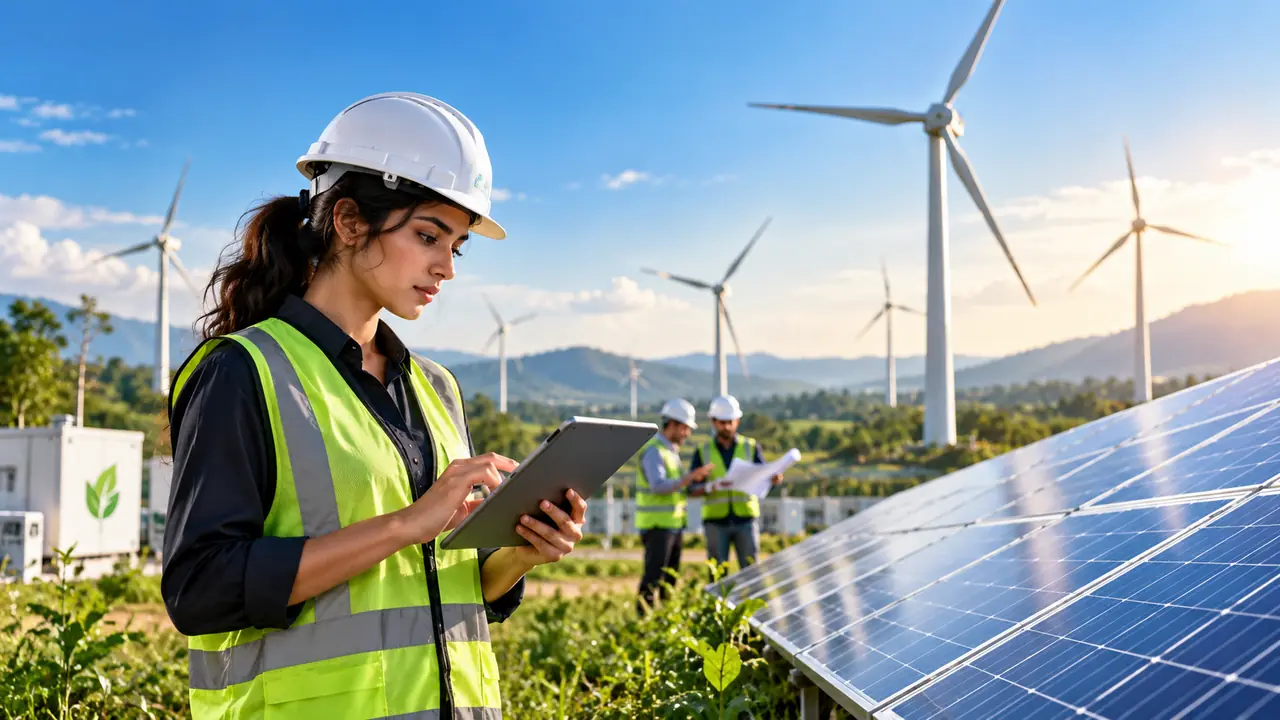
Solar panels on rooftops, electric scooters on city roads, wind turbines along the coast: the shift to clean energy is happening all around us. As countries work to reduce pollution and tackle climate change, they need people who can design, build, manage and finance a cleaner future.
India has set ambitious goals for clean energy, including a target of 500 GW of non-fossil fuel electricity capacity by 2030, which means the sector needs skilled people across engineering, science, business and policy. This guide explains the career paths and how students can prepare.
What does the green economy include?
- Renewable energy: solar, wind, hydro, bioenergy and green hydrogen
- Electric mobility: electric vehicles, batteries and charging infrastructure
- Energy storage and smart grids that balance supply and demand
- Energy efficiency and green buildings
- Climate and environment: pollution control, water, waste and conservation
- Sustainability in business: measuring and reducing companies' environmental impact
What are the main career paths?
| Role | What they do |
|---|---|
| Renewable energy engineer | Designs and builds solar, wind and other clean energy projects |
| EV and battery engineer | Develops electric vehicles, batteries and charging systems |
| Power systems and grid engineer | Integrates renewable energy into the electricity grid |
| Energy analyst | Studies energy use, costs and efficiency to guide decisions |
| Environmental scientist | Studies pollution, ecosystems and climate impacts |
| Sustainability and ESG analyst | Helps companies measure and reduce their environmental and social impact |
| Green building and urban planner | Designs energy-efficient buildings and sustainable cities |
| Climate policy specialist | Shapes government and organisational policies on climate and energy |
This is one of the few future-focused fields with strong options for students from every stream: engineering for Science students, ESG and finance roles for Commerce students, and policy and environmental law for Humanities students.
What skills do you need?
- Science and Maths for technical and engineering roles
- Data analysis for energy, climate and ESG work
- Understanding of environmental issues and sustainability principles
- Project management for large energy projects
- Communication to explain complex issues to businesses, governments and communities
- A genuine interest in protecting the environment
What is the education pathway?
In school (Classes 9 to 12)
- PCM for engineering roles in renewable energy, EVs and power systems
- PCB or PCMB for environmental science and ecology
- Commerce with Maths for ESG, sustainability finance and energy economics
- Humanities (Geography, Economics, Political Science) for climate policy and planning
- Join eco-clubs, science fairs or sustainability projects at school
After Class 12
- B.Tech or B.E. in Electrical, Mechanical, Energy, Environmental or Chemical engineering
- B.Sc. in Environmental Science, Physics, Chemistry or Geography
- B.Com, BBA or Economics with a sustainability or ESG focus
- B.Arch or planning degrees for green buildings and urban planning
After graduation
Master's degrees in renewable energy, sustainability, environmental management, climate policy or energy economics are widely available in India and abroad. Several European countries are strong in renewable energy education. See why students are looking at Europe.
Is this a good career for the future?
Clean energy and sustainability are long-term priorities for governments and businesses worldwide, so demand for skilled people is expected to keep growing. Many roles also involve real-world projects and human judgement, making them resilient to automation. Read more in our guide to AI-proof careers.
Is a green career right for you?
It may suit you if you care about the environment and want your work to make a visible difference, whether through engineering, science, business or policy. A psychometric career assessment can show which part of the green economy best matches your aptitude and interests.
Summary
Careers in renewable energy and sustainability span solar and wind engineering, electric vehicles, power grids, environmental science, ESG and climate policy. Unusually, the field welcomes students from every stream. India's clean energy goals and the global shift to sustainability mean opportunities are likely to keep growing for years to come.
Career Captain’s assessments and counselling help you find the part of the green economy that best matches your stream, aptitude and interests.
Book a counselling sessionFrequently asked questions
Which stream is best for a career in renewable energy?
PCM is best for engineering roles. PCB suits environmental science, Commerce with Maths suits ESG and sustainability finance, and Humanities suits climate policy and planning.
What is an ESG analyst?
An ESG analyst studies a company's environmental, social and governance performance to help businesses and investors make responsible decisions. It's a growing option for Commerce and Economics students.
Which engineering branch is best for renewable energy?
Electrical, Mechanical, Energy, Environmental and Chemical engineering can all lead to renewable energy careers.
Are there green careers for non-Science students?
Yes. Sustainability consulting, ESG analysis, climate policy, environmental law, communications and urban planning are open to Commerce and Humanities students.
Is renewable energy a good career in India?
India has ambitious clean energy targets, including 500 GW of non-fossil capacity by 2030, so demand for skilled professionals is expected to grow.