
Skills Students Can Start Building Today
Communication, creativity, problem-solving and digital fluency, plus simple actions to start building each skill this week.
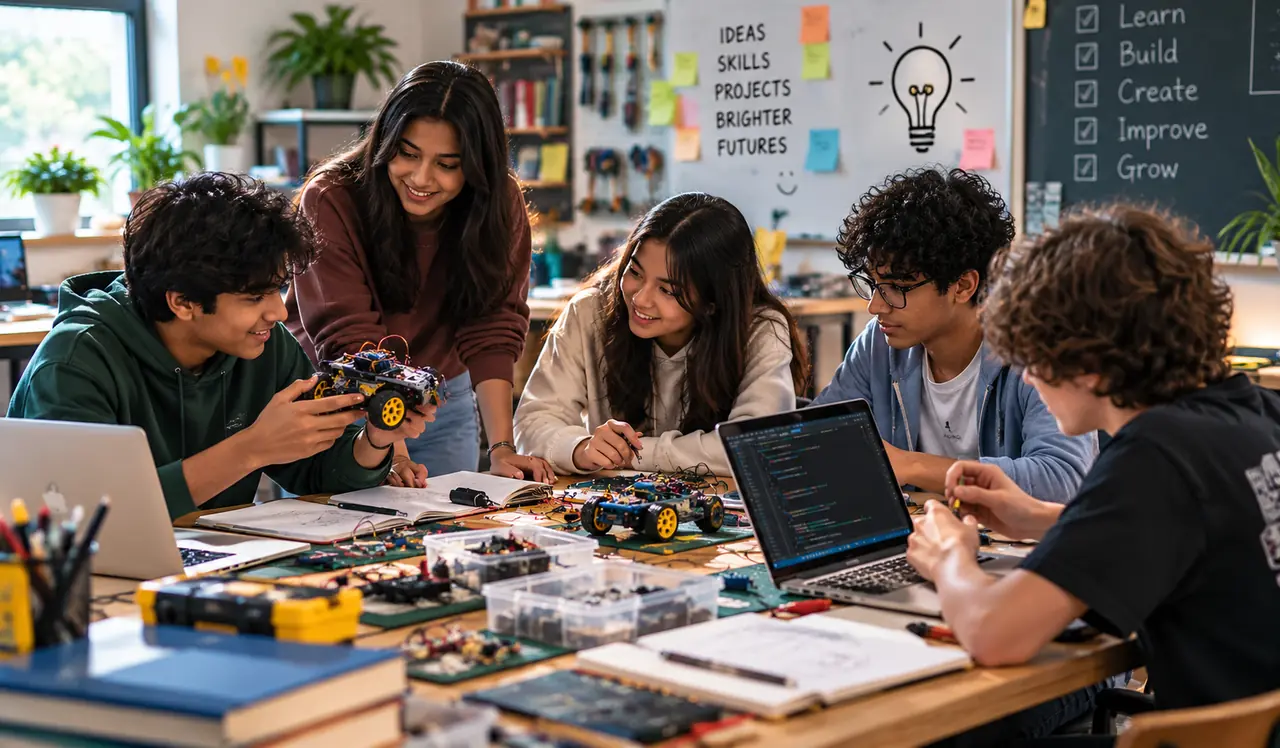
Students often hear that the future belongs to people with the “right skills”. But which skills? And how can a student in Class 8 or Class 11, already busy with school and tuition, actually start building them?
This guide is practical. It picks the skills that matter across almost every career and gives each one a simple action you can start this week, at little or no cost. For the bigger picture on why skills matter alongside marks, read Skills vs Marks: What Matters More?
Which skills matter most?
Whatever career you choose, these skills will help. They are sometimes called transferable skills because they carry over into any field.
1. Communication
Explaining ideas clearly in speaking and writing, and listening well.
Start this week: write a short weekly summary of something you learned, or explain one school topic to a family member in simple words.
2. Critical thinking
Questioning information, spotting weak arguments and making sound judgements.
Start this week: when you read a news story or social media post, ask three questions: who wrote this, what evidence do they give, and what might be missing?
3. Problem-solving
Breaking challenges into steps and finding practical solutions.
Start this week: pick a small problem at home or school, such as organising your study space, and plan a solution in steps.
4. Creativity
Generating new ideas and approaching problems differently.
Start this week: spend 20 minutes on a creative project: drawing, writing, photography, designing a poster or building something.
5. Digital fluency
Using technology confidently and responsibly, from documents and spreadsheets to basic coding and AI tools.
Start this week: learn one new skill in a spreadsheet or presentation tool, or try a free beginner coding lesson.
6. Collaboration
Working well in teams, sharing responsibility and handling disagreements.
Start this week: in your next group activity, take on a clear role and make sure everyone's ideas are heard.
7. Self-management
Planning time, staying organised and keeping motivated without being pushed.
Start this week: plan your week every Sunday. Our guides on time management and study habits will help.
8. Adaptability and learning to learn
Picking up new things quickly and staying calm when things change.
Start this week: try learning something completely new, like a new language app, a musical instrument or a sport, and notice how you improve.
A simple 30-day skill starter plan
| Week | Focus | Mini challenge |
|---|---|---|
| Week 1 | Communication | Explain one topic aloud each day and write one short summary |
| Week 2 | Digital fluency | Complete a short free online lesson in coding, spreadsheets or design |
| Week 3 | Problem-solving and creativity | Plan and complete one small project, such as a poster, video or model |
| Week 4 | Self-management | Plan the week in advance and track your progress daily |
Keep it light. The aim is to build momentum, not to add stress. Scale down during exam periods.
Where can students build these skills?
- At school: clubs, debates, quizzes, science fairs, sports, drama and student council
- Online: free courses and tutorials in coding, design, writing and more
- At home: helping manage a budget, planning a family trip or teaching a younger sibling
- In the community: volunteering, local events and competitions
- Through projects: a blog, a small app, a YouTube explainer, a research project or a fundraiser
How do you show your skills?
Skills are more convincing when you can show them. Keep a simple record of projects, certificates, activities and what you learned from each. This becomes valuable for college applications, scholarships and study abroad applications, and later for interviews.
Which skills should you prioritise?
You don't need to build everything at once. Start with skills that match your interests and likely career direction, while working on one area you find difficult. Understanding your strengths and interests helps you choose wisely, and a psychometric career assessment can point to the skills most useful for careers that suit you.
Summary
Communication, critical thinking, problem-solving, creativity, digital fluency, collaboration, self-management and adaptability are valuable in almost every career. Each can be built through small, regular actions at school, online, at home and through projects. Start with one skill this week, keep a record of what you do and build steadily alongside your studies.
Career Captain’s assessments reveal your strengths and suitable careers, and our counsellors help you choose the skills that matter most for your path.
Book a counselling sessionFrequently asked questions
Which skills should students learn for the future?
Communication, critical thinking, problem-solving, creativity, digital fluency, collaboration, self-management and adaptability are useful in almost every career.
How can students build skills without affecting their studies?
Start small with 20 to 30 minutes a few times a week, use school clubs and activities, and scale down during exam periods. Many skills, like self-management, also improve studying.
Are online courses useful for school students?
Yes. Many free online courses teach coding, design, writing and other skills. Choose short, beginner-friendly courses and apply what you learn in small projects.
How can students show their skills to colleges?
Keep a record of projects, activities, certificates and what you learned from each. This helps with college, scholarship and study abroad applications.
At what age should students start building skills?
It's never too early. Middle school is a great time to start exploring, and Classes 9 to 12 are ideal for building skills more seriously alongside studies.