
Skills vs Marks: What Matters More?
What colleges and employers really look for beyond report cards, and how students can build both marks and skills without burning out.
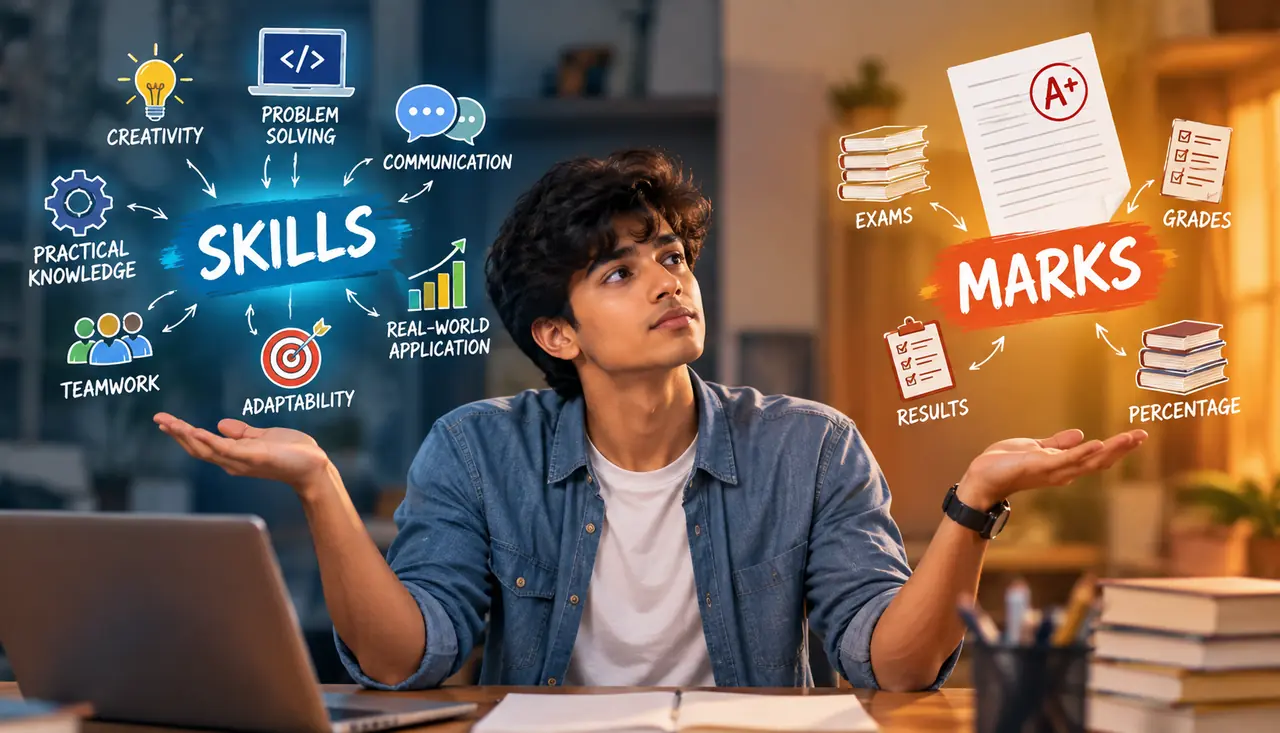
In many Indian homes, the report card is the main measure of a student's future. A 95% brings celebration; an 80% brings worry. At the same time, students hear a different message online: “Marks don't matter, skills do.”
So which is right? The honest answer is that both matter, but in different ways and at different stages. Understanding when each one counts helps students focus their energy wisely, and helps parents look beyond percentages. This guide explains how.
Why do marks matter?
It would be misleading to say marks don't matter. In India, they still act as an important gateway:
- Eligibility: many courses and entrance exams set minimum board percentages
- Admissions: some colleges and courses still consider board results when shortlisting
- Scholarships: many scholarships in India and abroad are based on academic performance
- Early job screening: some employers use academic records as a first filter for freshers
- Study abroad: universities abroad review academic transcripts alongside other factors
Marks also show something useful: consistency, discipline and the ability to learn and perform under pressure.
Why do skills matter?
Marks can open a door, but skills decide what happens after you walk through it. Skills matter because:
- Entrance exams test application, not just memory. JEE, CLAT, CUET and design entrances all reward understanding and reasoning
- Interviews and group discussions test communication, thinking and confidence
- Portfolios and projects are central for design, architecture, media and tech careers
- Applications abroad weigh essays, activities and evidence of initiative
- Careers are built on skills. Once you're working, nobody asks about your Class 10 percentage. They care about what you can do
When does each matter most?
The balance between marks and skills shifts as students move through different stages:
| Stage | Marks | Skills |
|---|---|---|
| Classes 9 and 10 | Build strong foundations and keep stream options open | Explore interests and discover strengths |
| Classes 11 and 12 | Very important for eligibility, admissions and scholarships | Important for entrance exams, interviews and applications |
| College | Matter for placements, higher studies and scholarships | Increasingly decisive through internships and projects |
| Career | Rarely considered after the first job | Drive performance, promotions and growth |
In simple terms: marks help you get in; skills help you grow.
Which skills should students build?
Some skills are valuable in almost every career. These are sometimes called transferable or future-ready skills:
As students move closer to a career, they'll add technical skills for their field, such as coding, accounting, lab techniques or design software. Knowing your natural strengths helps you choose which skills to develop first. For practical ways to begin, see skills students can start building today.
How can students build skills without hurting their marks?
Skill-building doesn't have to compete with studies. In fact, many skills make studying more effective. Try these:
- Use school opportunities. Debates, quizzes, science fairs, Model UN, clubs and student council all build skills.
- Do one small project each term. Build a simple app, start a blog, organise an event or run a class fundraiser.
- Take short online courses in areas you're curious about, even just a few hours a week.
- Practise presenting. Volunteer to explain topics in class or present group work.
- Read beyond textbooks. News, non-fiction and quality articles build knowledge, vocabulary and thinking.
- Volunteer or help at home. Real responsibilities build maturity, planning and people skills.
Keep it balanced. In Classes 10 and 12, board exams deserve priority, so scale skill activities up or down around exam seasons.
Common myths about skills and marks
What should parents focus on?
Parents can help by valuing effort and growth, not just percentages. Celebrate a well-delivered presentation or a finished project as much as a good score. Encourage one or two meaningful activities rather than a long list, and avoid comparing children only on marks. A child who feels valued for their abilities is more motivated in their studies too.
Summary
Marks and skills are not rivals. Marks act as a gateway to courses, colleges and scholarships, while skills determine how well you perform and grow once you're through the door. Aim for solid marks that meet your target requirements, and build transferable skills steadily alongside your studies. That combination prepares you not just for exams, but for life.
Career Captain's assessments identify your strengths and suitable careers, and our counsellors help you plan the marks and skills you'll need to get there.
Book a counselling sessionFrequently asked questions
Are marks still important for students in India?
Yes. Board marks affect eligibility for many courses, entrance exam criteria, scholarships and some college and job shortlists. They're a gateway, even though they aren't the whole story.
Which skills matter most for students?
Communication, critical thinking, problem-solving, collaboration, creativity, digital literacy and self-management are valuable in almost every career. Add technical skills related to your chosen field as you progress.
Can good skills make up for low marks?
Skills can make a big difference, especially in entrance exams, interviews, portfolios and jobs. But very low marks can still block eligibility for some courses, so aim to meet the minimum requirements while building skills.
How can students build skills while studying?
Join clubs and competitions, take on leadership roles, do small projects, take short online courses, volunteer, read widely and practise presenting and writing. Even 30 minutes a day adds up.
Do universities abroad look at skills or marks?
Both. Most universities abroad look at academic results along with essays, recommendations, extracurricular activities and evidence of skills and initiative.